Hurricane Season and Home Buying in South Florida: What you need to know before making an offer.
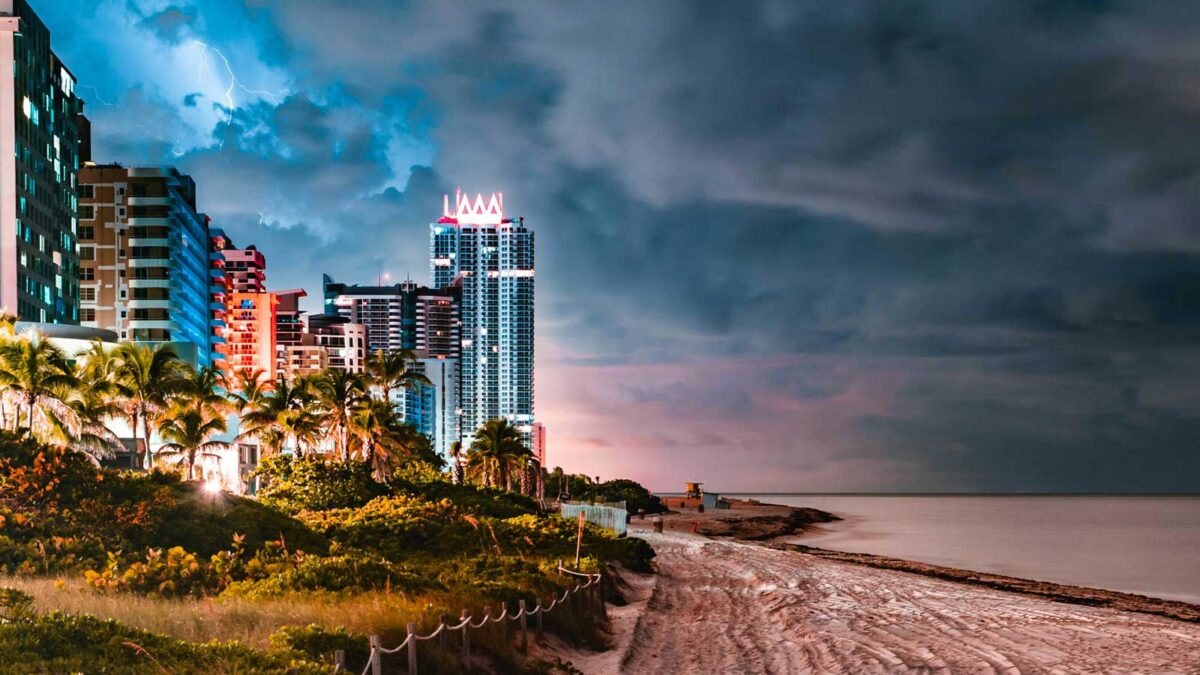
Most buyers slow down in July. They hear “hurricane season” and assume it means risk, uncertainty, or a reason to wait until fall. That instinct is understandable. It is also one of the reasons summer can be a better time to buy in Miami-Dade than most people realize. Hurricane season does not mean you should stop your search. It means you should do your homework in a specific order, ask the right questions before making an offer, and work with someone who knows exactly what to look for in a South Florida home.
Here is what that looks like in practice.
Does Hurricane Season Actually Affect the Buying Process in Miami-Dade?
Yes, but not in the way most buyers expect. The storm risk is real and should be taken seriously. What changes is not whether you buy, but what you verify before you do.
Summer in South Florida tends to bring reduced buyer competition. Families tied to school calendars have already moved, and out-of-state buyers are less active. That creates a window where serious, prepared buyers can negotiate from a stronger position than they would find in January or February.
The buyers who get into trouble during hurricane season are not the ones who bought in summer. They are the ones who skipped the due diligence steps that matter most in a coastal market.
What Should I Look for When It Comes to Windows and Storm Protection?
Impact glass is not just a safety feature. In Miami-Dade County, it carries direct financial consequences.
Homes with Miami-Dade County-approved impact windows and doors throughout the structure typically qualify for significant discounts on wind insurance premiums compared to homes that rely on accordion shutters, fabric panels, or plywood. When a home has a mix of protection types, insurers look at the full picture before assigning a rate.
Before making an offer, buyers should confirm:
- Whether windows are impact-rated or standard glass with storm shutters
- The approval number on any impact products (Miami-Dade NOA, or Notice of Acceptance)
- Whether shutter systems are present for any non-impact openings, and whether they are manual or motorized
- Whether garage doors are hurricane-rated, which is often an overlooked weak point
This information affects your insurance quote, your monthly payment, and your total cost of ownership. It should be part of the conversation before the offer is submitted, not during inspection.
Why Does Roof Age Matter So Much for Home Insurance in South Florida?
In South Florida, the age and condition of a roof can determine whether a home is insurable at all.
Many insurers in Florida decline to write new policies on homes with roofs over 15 years old. Others will insure them but only at actual cash value rather than replacement cost, which means a major claim could leave a buyer significantly short of what it costs to rebuild. Citizens Property Insurance Corporation, the state-backed insurer of last resort, has its own roof age requirements that have tightened in recent years.
A roof permit and a 4-point inspection will surface the age, material, and condition of the roof. Concrete tile, metal, and modified bitumen each age differently and carry different insurer preferences. A tile roof installed in 2012 and a tile roof installed in 2021 are not equivalent in the eyes of an underwriter.
The practical step here is to request roof documentation early, ideally before the offer or immediately upon going under contract, so that insurance can be quoted and any negotiation around a roof credit or replacement can happen within the inspection period.
How Do I Find Out If a Property Is in a Flood Zone?
Flood zone designation is public information. FEMA’s Flood Map Service Center (msc.fema.gov) allows anyone to look up a property’s flood zone by address.
What matters for buyers is understanding what the designation means in dollar terms. Properties in a Special Flood Hazard Area, designated as Zone AE or VE, are required by lenders to carry flood insurance if there is a federally backed mortgage. That cost varies by structure, elevation, and coverage amount, and it can range from a few hundred dollars a year to several thousand.
An elevation certificate, when available, gives the lender and insurer precise data about the home’s lowest finished floor relative to the Base Flood Elevation. A home that sits above the BFE typically qualifies for lower flood insurance rates. When a seller has an existing elevation certificate, buyers should ask for it. When one does not exist, a licensed land surveyor can produce one, and the cost is usually a few hundred dollars.
Buyers purchasing in areas of Palmetto Bay, Cutler Bay, or other coastal communities near Biscayne Bay or the Intracoastal should factor flood zone status into their monthly cost estimate before they fall in love with a specific property.
Should I Get an Insurance Quote Before Making an Offer?
Yes. This step is non-negotiable in today’s South Florida insurance market.
Florida’s property insurance environment has changed significantly over the past several years. Carriers have exited the state or tightened underwriting standards, which means the monthly payment a buyer calculated based on an online estimate may be meaningfully different from the actual quote an underwriter produces once they review the property details.
A buyer who gets an insurance quote before submitting an offer can:
- Build the accurate monthly cost into their offer decision rather than discovering it during the financing contingency period
- Use insurance bindability as a negotiation lever if the quote reveals an issue the seller has not disclosed
- Avoid the scenario where a deal falls apart at closing because the lender cannot bind insurance at an acceptable rate
An independent insurance broker who works regularly in Miami-Dade can typically turn around an indicative quote within 24 to 48 hours once they have the property address and basic details. This is worth doing before your offer, not after.
How Does an Experienced Agent Protect Buyers During Hurricane Season?
The contract matters as much as the inspection in a market like this.
Florida’s standard AS IS Residential Contract for Sale and Purchase includes contingency periods for inspection, financing, and insurance. An experienced agent knows how to use these periods strategically. That means structuring the inspection period to allow enough time for a 4-point inspection, a wind mitigation inspection, and an insurance quote, then using the results of those steps to either renegotiate terms or, if necessary, exit the contract cleanly.
Wind mitigation inspections are worth specific mention. A licensed inspector documents the roof covering type, attachment method, roof shape, and opening protections. That report goes directly to the insurance carrier and can unlock discounts that meaningfully reduce the annual premium. Sellers who already have a wind mit report on file should provide it, and buyers whose agents know to request it consistently save money from day one.
Beyond the inspection, a seasoned agent who has worked extensively in Palmetto Bay, Pinecrest, and Cutler Bay knows which neighborhoods have older infrastructure, which properties have a history of flooding or permit issues, and which sellers are motivated enough to contribute to corrective costs. That local knowledge does not show up on Zillow. It comes from years of working the same market, the same streets, and the same transaction types.
The Bottom Line
Hurricane season is not a reason to pause your home search in South Florida. It is a reason to be more deliberate about it.
Buyers who verify storm protection, check the roof age, understand their flood zone, get an insurance quote before they offer, and work with an agent who knows how to structure contingencies properly are not taking more risk than buyers who wait. They are taking the same market with a better plan.
If you are shopping for a home in Palmetto Bay, Pinecrest, Cutler Bay, or Coral Gables and want to work through these questions before your next offer, get in touch. This is exactly the kind of preparation that separates a smooth closing from an expensive surprise.